3D Product Animation Services
Company USA
We help US manufacturers, B2B brands, and engineering pioneers showcase product functionality, internal mechanics, and unique selling points through high-definition 3D product animations.
Trusted By Industry Leaders








Core Services
3D Product Animation Services
Our 3D product animation services help businesses showcase products through detailed, engaging, and technically accurate visuals. We create animations that highlight product features, functionality, components, assembly, and real-world applications, making complex products easier to understand for customers, engineers, distributors, and sales teams.
Photorealistic Product Launch Videos
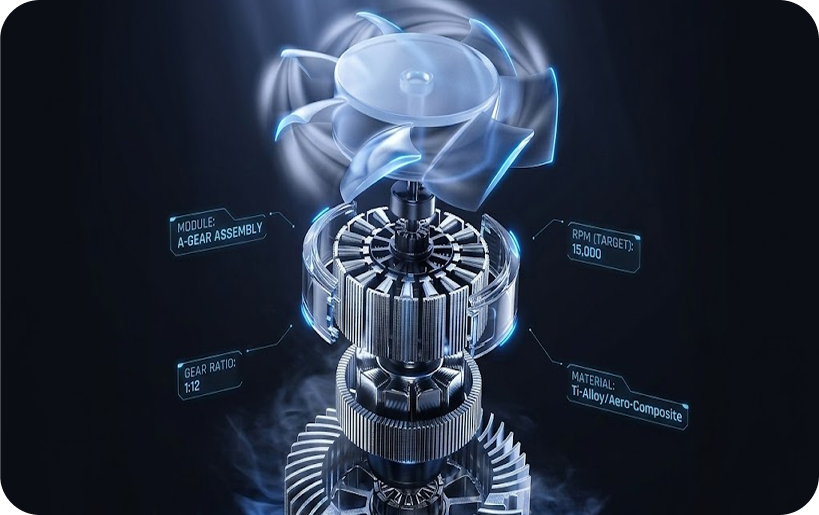
Photorealistic Product Launch Videos
Create cinematic product launch trailers that capture buyer attention, highlight premium material finishes, and emphasize key product differentiators for commercial campaigns.
Exploded Views & Assembly Animations
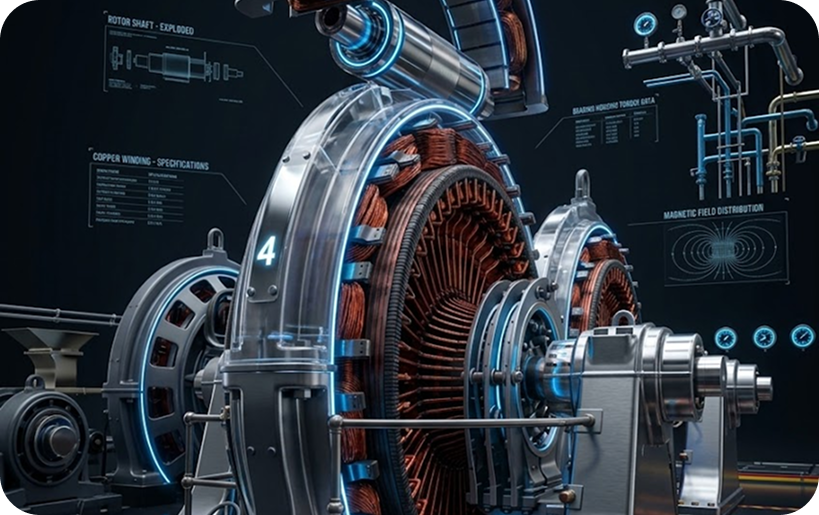
Exploded Views & Assembly Animations
Visualize complex internal components, layer-by-layer mechanical movement, and part interactions through dynamic cutaways and cross-sections.
E-Commerce & Web-Ready 3D Spins
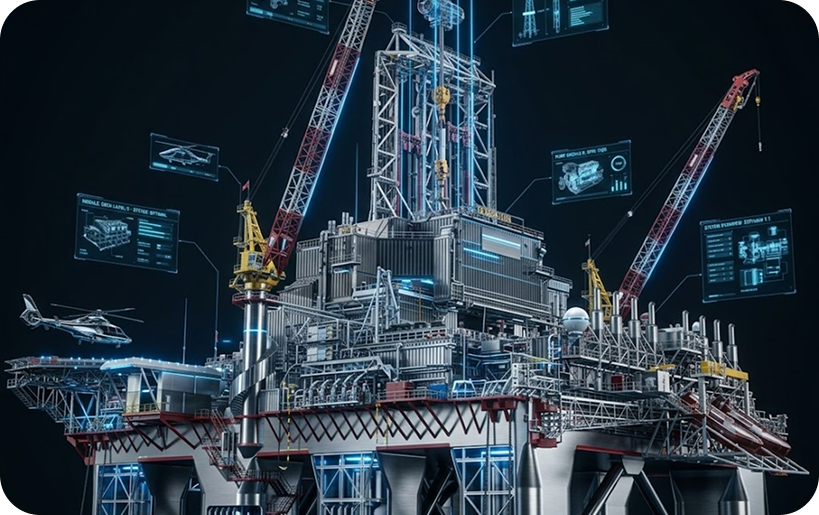
E-Commerce & Web-Ready 3D Spins
Elevate online shopping and product pages with interactive 360-degree product views and lightweight WebGL models designed for rapid loading.
Technical Functionality & X-Ray Visuals
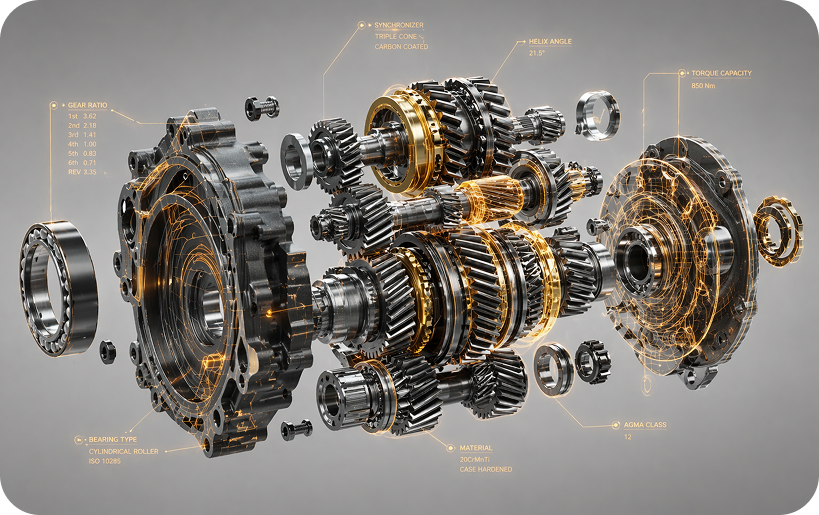
Technical Functionality & X-Ray Visuals
Demonstrate invisible processes—such as liquid flows, thermal distribution, electrical currents, and internal gear kinematics—with x-ray and transparent rendering.
Safety & Training Modules
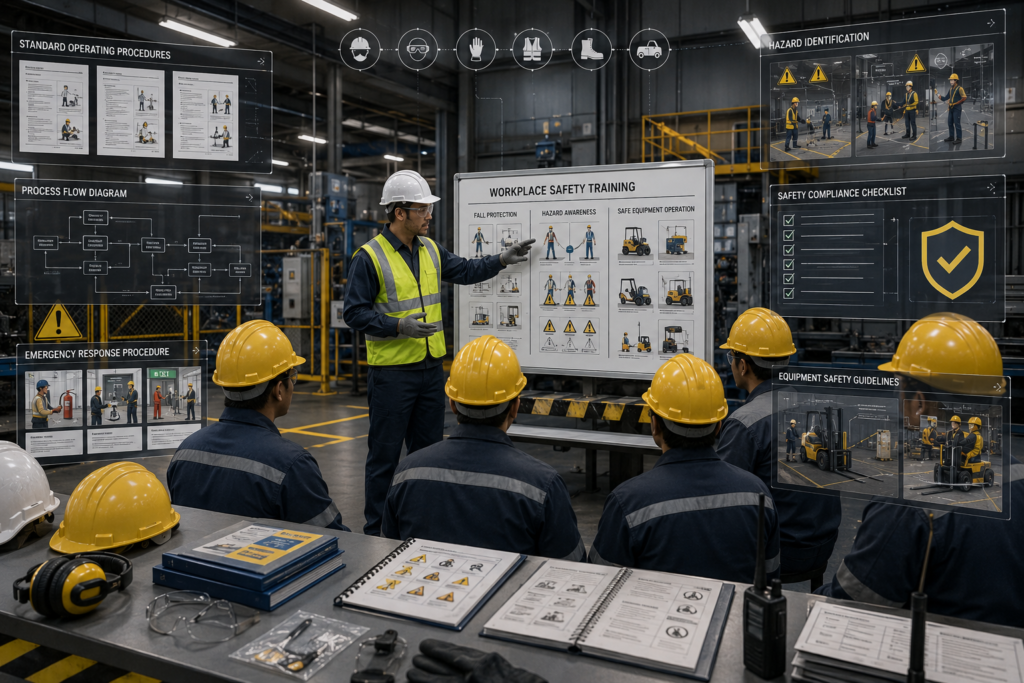
Safety & Training Modules
Enhance workplace safety and compliance with interactive training modules, animations, and SOP digitization. Our safety solutions simplify communication, making training sessions impactful and memorable.
2D Motion Graphics & Animation
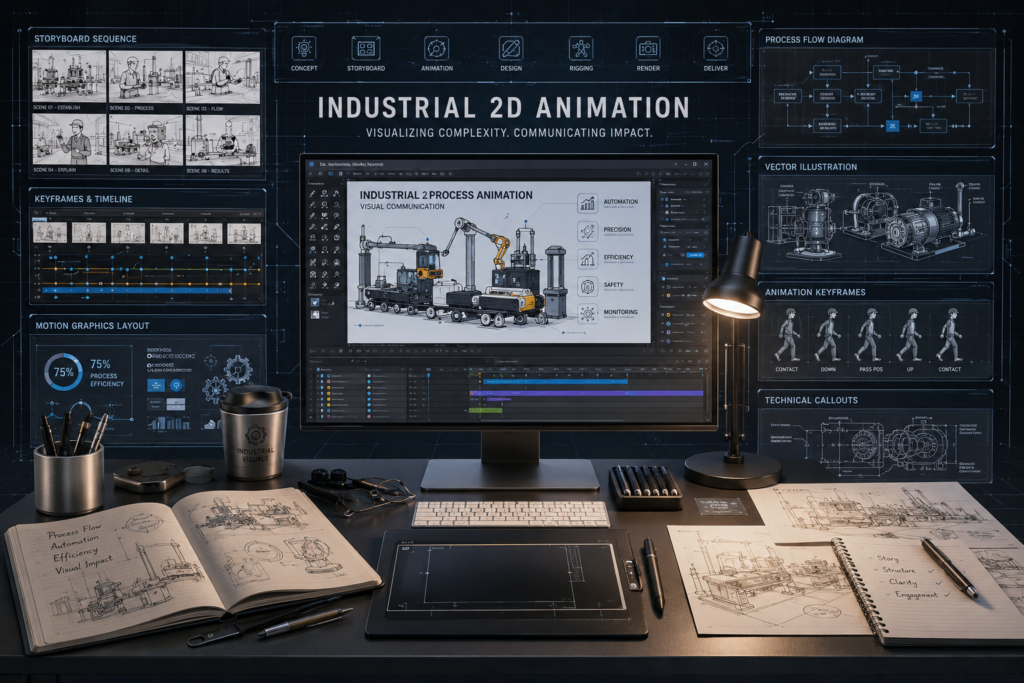
2D Motion Graphics & Animation
Tell your story with creative 2D animations that simplify ideas and deliver visually engaging content. From motion graphics to whiteboard animations, our services are designed for branding, training, and educational content.
Corporate Video Production
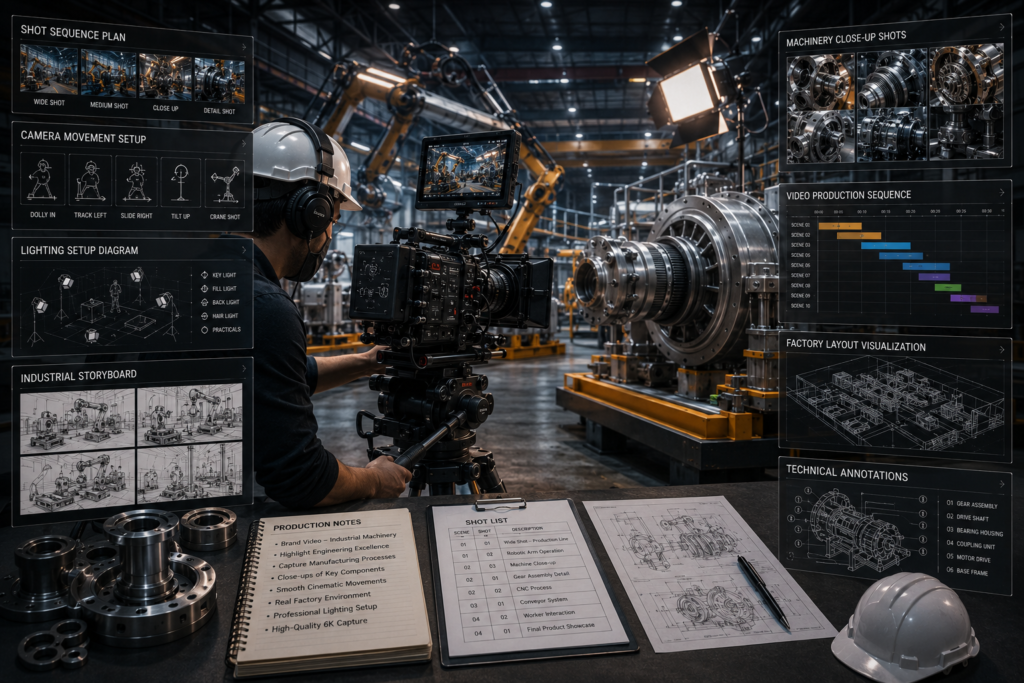
Corporate Video Production
Capture the essence of your brand with professional video shoots tailored for ad campaigns, corporate communication, and product showcases. Our team ensures every frame speaks your story.
Designing & Branding
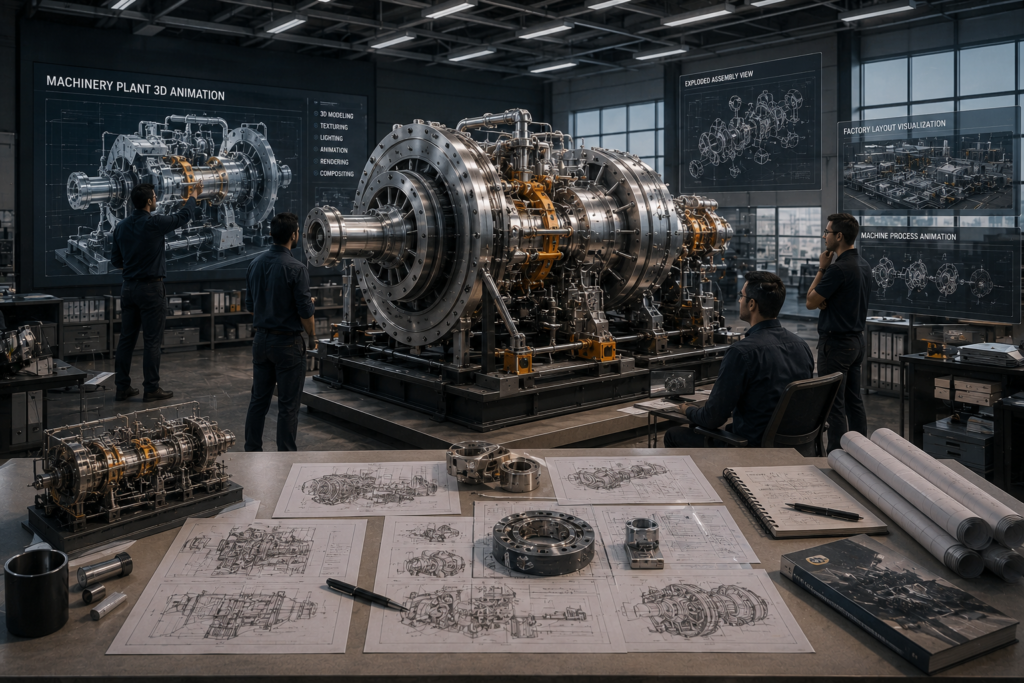
Designing & Branding
Establish a strong visual presence with creative branding solutions, stunning designs, and user-friendly interfaces. Our services ensure your brand connects meaningfully with your audience.
Request for Service
Fill in the details below and our team will connect with you.
Explore visuals, applications, and service details.
Ready to Visualize Your System?
Collaborate with us to transform your industrial systems into precise, high-impact visual experiences designed for clarity, communication, and performance.
FAQs
Clarity, Before We Begin
Everything you need to know about our process, timelines, and approach to industrial 3D visualization.
Our Blog
Knowledge Hub for Industry Leaders
Explore expert perspectives, industry trends, engineering visualization techniques, safety training solutions, and the latest advancements shaping the future of industrial technology.
- October 1, 2026
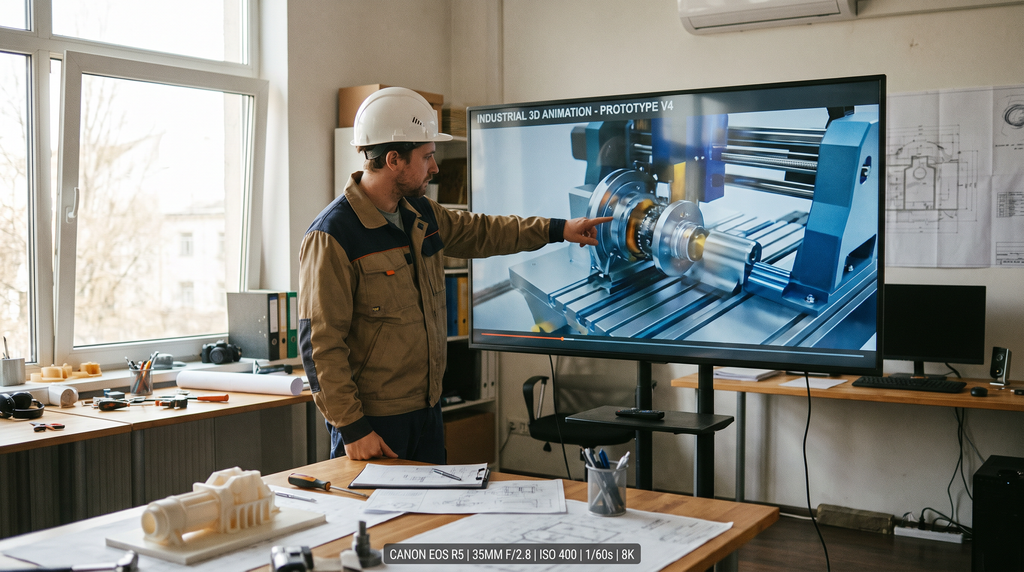
The Blueprint of Modern Industrial 3D Animation
The Blueprint of Modern Industrial 3D Animation
Industrial 3D animation takes engineering data that already exists—the CAD assemblies, the tolerances, the kinematic constraints—and turns it into a moving, photorealistic story a buyer or technician can actually follow. The source material is the machine itself, not an artist’s sketch of one.
Think of it as an X-ray with a camera crew. A physical lens cannot sit inside a sealed gearbox while it runs under load, but a virtual one can, and it can strip away the housing mid-shot without stopping the cycle. That same capability makes 3D animation for manufacturing processes particularly valuable: conveyors, assembly lines, and fluid systems can all be visualized in motion before a single component is fabricated or repositioned on the floor.
That is the dividing line with commercial CGI. Entertainment work optimizes for mood; engineering-accurate 3D visualization optimizes for whether the cam follower moves the way the drawing says it does. Aesthetics serve accuracy, not the reverse. And in 2026, more of this output is shipping as real-time, interactive scenes rather than fixed video files.
Key Applications in Industrial Design and Operations
Design teams run assemblies virtually to catch mechanical clashes before anyone cuts metal. Safety groups commission industrial safety training animation services to show interlocks, fail-safes, and emergency shutdown sequences without exposing a person to a live hazard. Operations teams use manufacturing production line 3D animation to reveal the heartbeat of a system—gear trains meshing, hydraulic fluid routing, conveyor handoffs timed to the second.
Why Industrial Machinery Needs 3D Technical Animation
A 400-page manual compresses into a 30-second clip when motion carries the explanation. That matters during an RFP, where procurement committees include people who have never read a sectional drawing. An industrial equipment product demonstration video lets them see the internal components they are being asked to fund. Motion also travels: technical 3D animation for engineering reads the same in Stuttgart, Shenzhen, and Sheboygan, with no translation budget.
What Most Guides Miss: The ‘CAD-to-Content’ Reality
Nearly every guide skips the unglamorous middle. A native CAD assembly is not animation-ready. It carries millions of polygons, redundant fasteners, parametric history, and geometry built for manufacture rather than for rendering. The CAD to 3D animation workflow begins with decimation, retopology, and rebuilding surfaces that broke during translation.
The useful analogy is a Lego set. The model arrives as a finished brick-by-brick build, and the animator has to take it apart deliberately, group the pieces by how they move, then reassemble them in an order that tells a story rather than an order that matches the shop floor.
Hierarchy and metadata decide how much of that work is painful. Clean part naming and correct parent-child relationships make motion rigging fast; a flat, unnamed mesh soup does not. The payoff shows up in exploded view animation for industrial equipment, where components separate along real assembly axes—something a static diagram can only imply.
Pros and Cons of 2D vs 3D Animation in the Industry
- 2D wins on cost and speed for process flowcharts, control logic, and schematic sequences where spatial depth adds nothing.
- 3D wins on spatial truth—clearances, fit, and assembly order are only convincing when the geometry is real.
- 3D carries more information per second: 360-degree rotation, cutaways, and internal camera positions in a single take.
- 3D costs more downstream: render farms, GPU hardware, and iteration time scale with fidelity.
Methodology: How to Evaluate 3D Animation Services
Start with technical literacy. Ask a prospective studio to explain what an arc flash is, or how a six-axis robot differs from a SCARA. Vendors offering industrial 3D animation services should answer without stalling.
Next, audit data security—proprietary CAD leaving your network needs NDAs, access controls, and a deletion policy.
Finally, test scalability: a credible industrial CGI animation company keeps project files structured so a Rev C design change costs an update, not a rebuild.
The Evolution of Technical Motion: AI and Industry Trends
The honest answer to the AI question starts with a distinction. Generative models are extraordinary at plausible imagery. Industrial work does not reward plausibility; it rewards a bearing that sits exactly where the drawing places it. Those are different problems.
Where AI genuinely earns its keep in 2026 is the repetitive middle of production—denoising renders, suggesting PBR texture assignments, auto-rigging predictable mechanical linkages, cleaning up mesh errors after CAD translation. Co-pilot, not director.
Meanwhile, industrial digital twin 3D animation has pulled visualization out of marketing and into operations. The same optimized geometry that fed a sales film now drives a live dashboard, with sensor data animating the model in something close to real time.
The market is responding by narrowing. Studios that understand switchgear arc containment or pharmaceutical fill-finish lines are winning work over generalists with prettier reels. Boutique precision is the trend line.
Will 3D Animation Be Replaced by AI?
Not in this discipline, and the reason is the accuracy gap. Generative systems approximate; engineering tolerances do not tolerate approximation. A rendered valve that closes in the wrong direction is not a stylistic choice, it is a liability.
Human oversight remains the control point—someone has to verify mechanical logic, confirm safety sequences against the actual control philosophy, and sign off. The realistic forecast is convergence: AI absorbing the grind, technical directors owning the judgment.
How to Get Into the 3D Animation Industry
Software fluency comes first—3ds Max, Maya, Cinema 4D, and increasingly Blender, which has become a legitimate presence in industrial design pipelines. Learn a CAD translator too.
Then build the right portfolio. Hiring managers in this niche skip the character reels. Show a clean exploded assembly, a constrained linkage that moves correctly, a cutaway of something that actually exists. Basic statics, kinematics, and blueprint literacy separate candidates faster than render quality does.
Critical Considerations and Technical Limitations
Machinery has its own uncanny valley. A pristine, scratch-free press in a spotless virtual bay reads as a toy to anyone who has worked a plant floor. Weld spatter, paint chips, coolant staining, and uneven wear are what make a render credible to the audience that matters.
Fidelity also trades directly against responsiveness. Interactive scenes running in a browser or headset need aggressive polygon budgets and baked lighting, which means the showpiece cinematic and the real-time version are rarely the same asset.
Some jobs simply do not need this. A software UI walkthrough, a service scheduling explainer, a basic org process—screen capture or 2D motion handles those better and cheaper.
And the hardest constraint is upstream. Incomplete, unnamed, or geometrically broken CAD produces slow, expensive, inaccurate animation. Garbage in, garbage out applies with unusual force here.
When This Isn’t the Right Approach
High-speed videography beats CGI when the subject is real material behavior—fracture, deformation, spray patterns, vibration under genuine load. Simulation approximates; the camera records.
Low-margin commodity products rarely justify the budget either; a 2D overlay on existing footage gets the point across. And there is a visual overkill trap worth naming: if a labeled diagram answers the question in five seconds, animating it adds cost and subtracts clarity.
Is 3D Animation a High Paying Job?
Compensation splits sharply by specialization. Generalists compete with a large global talent pool; industrial, medical, and defense animators compete with a much smaller one. That is the technical premium—the ability to read a GD&T callout, interpret a P&ID, and question an engineer’s assumption is scarcer than modeling skill. Manufacturing, energy, and aerospace employers continue bidding for that combination in 2026.
Comparison: 3D Visualization Approaches
| Approach | Best for | Trade-off |
|---|---|---|
| Photorealistic rendering | Trade show loops, launch films, investor decks | Fixed camera, re-render for every change |
| Interactive WebGL | Spec configurators, remote sales calls, interactive 3D machine visualization | Reduced fidelity to hit frame rates |
| VR/AR training | Lockout-tagout drills, confined-space procedures, 3D plant walkthrough animation services | Hardware dependency, longer build time |
Decide by deployment platform, how much the user needs to control, and how often engineering revises the design. Booth traffic favors spectacle; maintenance training favors repeatable interaction.
What You Need to Know: Key Takeaways
Treat industrial 3D animation as an engineering deliverable that happens to sell well. Accuracy depends on disciplined CAD optimization and a team that understands the mechanism, not just the mesh. AI accelerates production without owning the technical judgment. The return shows up in two places: deals that close faster because stakeholders finally see the machine, and technicians who make fewer errors because they watched the procedure first.
Where to Look Next
Go back to manufacturer documentation for exact tolerances, clearances, and operating sequences before a single frame is approved—the drawing set is the script. Check the relevant standards bodies for how hazards, warnings, and procedural steps should be communicated visually, since safety content carries obligations that marketing content does not. Academic texts on mechanical visualization and technical communication fill in the theory behind why certain views teach better than others.
- June 19, 2026
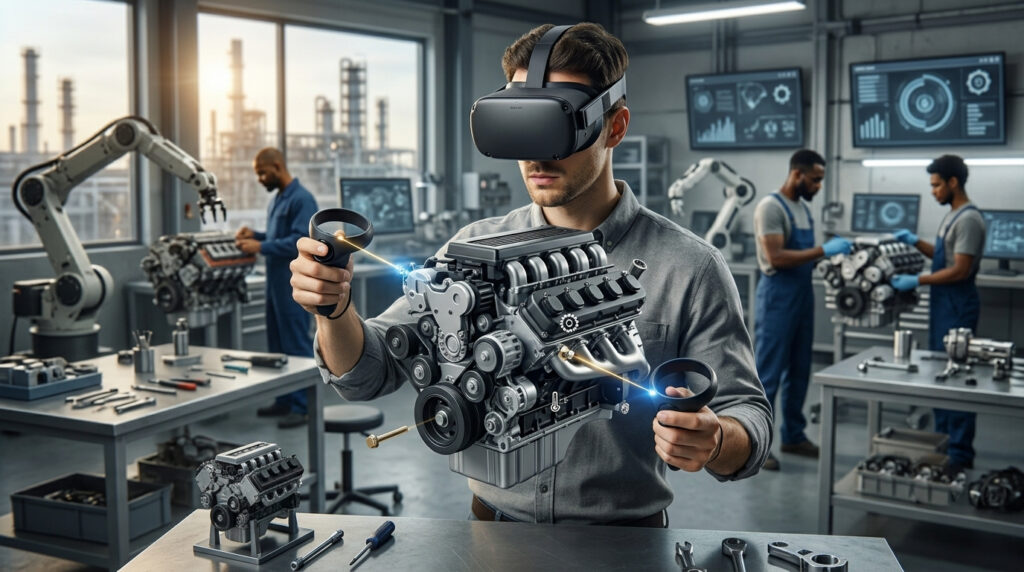
The Future of 3D Interactive Experiences in Industry
Introduction
3D interactive experiences are transforming the way industrial companies present products, train employees, and engage customers. By combining advanced visualization technologies with real-time interaction, businesses can create immersive experiences that improve understanding, communication, and decision-making. As Industry 4.0 continues to evolve, interactive 3D solutions are becoming an essential part of modern industrial operations.

- June 19, 2026
Why Engineering Excellence Drives Business Success
Introduction
Engineering excellence is the foundation of successful industrial businesses. It ensures that products, processes, and solutions are designed and executed with the highest standards of quality, efficiency, and innovation. Companies that prioritize engineering excellence are better positioned to improve performance, satisfy customers, and achieve long-term growth.